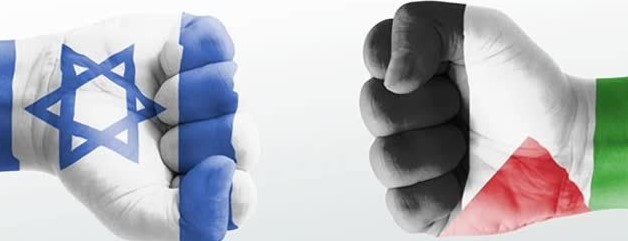
Course Description
The Israeli-Arab/Palestinian conflict is one of the most enduring and contested conflicts in modern international politics. Rooted in competing national movements and claims to the same territory, it has developed through wars, displacement, occupation, terrorism, diplomacy, and repeated—yet ultimately unsuccessful—attempts at conflict resolution. The Hamas-led attack on Israel on October 7, 2023, and the subsequent war in Gaza have opened a new and particularly destructive chapter, with profound consequences for Israelis and Palestinians as well as for the wider Middle East.
This course provides students with the historical and political knowledge necessary to understand how the conflict developed and why it has proved so difficult to resolve. We begin with the emergence of Zionism and Arab nationalism, the British Mandate, the creation of Israel and the Palestinian Nakba in 1948, and the transformation of the conflict following the 1967 war. We then examine the development of the Palestinian national movement, the rise of the PLO and Hamas, the Israeli settlement movement, and attempts to resolve the conflict through diplomacy and the peace process. The final part of the course places the Israeli-Palestinian conflict within the changing regional context, including the Abraham Accords, October 7, the war in Gaza, and their consequences for the future of Israelis and Palestinians.
Throughout the course, particular attention is paid to competing Israeli and Palestinian narratives and interpretations of key historical events. Rather than presenting the conflict through a single explanatory framework, students will encounter different perspectives and learn to distinguish between historical evidence, political claims, narratives, and normative arguments.
The course combines lectures, academic readings, media analysis, discussion, and simulation. Students are expected to approach controversial questions with intellectual openness, critically evaluate sources and arguments, and engage seriously with perspectives that may challenge their own assumptions.
- Teacher: Adam Coman
- Teacher: Irena Kalhousová